Shockwave Therapy in St. Catharines
Shockwave therapy is what we reach for when a tendon problem has stopped responding to everything else. Acoustic pressure waves, delivered through the skin, restart a stalled healing response in as little as five to ten minutes per area.
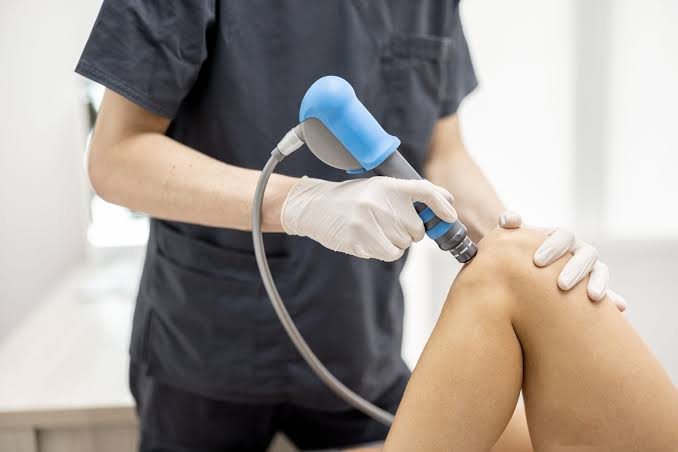
If you have had heel pain for eight months, tried the stretches, bought the night splint, rested it, and it still bites on the first step out of bed, that tissue has usually stopped behaving like an inflamed structure and started behaving like a degenerated one. Rest does not fix degeneration. It needs a stimulus.
That is what shockwave provides. Acoustic pressure waves delivered through the skin into the target tissue, triggering a localised healing response, increasing blood flow to an area that has poor circulation to begin with, and reducing pain signalling. It is non-invasive, it takes five to ten minutes per area, and you walk out and drive yourself home.
Shockwave therapy is not widely available in St. Catharines, which is part of why patients travel to us for it from across Niagara.
What Shockwave Therapy Treats
Shockwave is at its best on chronic tendon and soft tissue problems, generally those lasting longer than three months.
- Plantar fasciitis and heel spurs. The most common reason people book it, and the condition with the strongest evidence base.
- Tennis elbow (lateral epicondylitis) and golfer's elbow (medial epicondylitis). See our elbow and tennis elbow page.
- Achilles tendinopathy, both mid-portion and insertional.
- Calcific tendinitis of the shoulder. Shockwave can help break down calcium deposits that manual therapy cannot touch.
- Patellar tendinopathy (jumper's knee).
- Greater trochanteric pain syndrome / gluteal tendinopathy (hip pain when lying on that side).
- Shin splints and medial tibial stress syndrome.
- Chronic myofascial trigger points that keep returning.
- Scar tissue and adhesions restricting movement.
If your problem is acute, inflamed and less than a few weeks old, shockwave is usually not the first move. We would treat it with hands-on physiotherapy and loading first, and hold shockwave in reserve.
How Shockwave Therapy Works
A handpiece delivers rapid pressure waves into the tissue. Three things happen.
Blood flow increases. Tendons have poor vascular supply, which is precisely why they heal slowly. Shockwave stimulates new capillary formation in the treated area.
The healing process restarts. Chronic tendinopathy is a stalled repair process. The mechanical stimulus provokes a fresh inflammatory and remodelling response, which sounds counterintuitive until you understand that the tissue had stopped trying.
Pain signalling drops. Shockwave appears to reduce substance P concentration and desensitise local nerve endings, which is why many patients report improvement after a single session even though the tissue itself takes weeks to remodel.
What a Shockwave Session Is Like
The therapist locates the exact painful point by palpation, applies gel, and works the handpiece over the area for roughly five to ten minutes. Intensity is adjusted to your tolerance, and we start conservative and build.
It is uncomfortable. Most patients describe it as a strong tapping or a deep ache at the treatment site, sharper over the most sensitive spot. It is over quickly, and the discomfort stops the moment the handpiece lifts. You may feel some soreness for 24 to 48 hours afterwards.
Shockwave is almost always delivered as part of a physiotherapy visit rather than on its own. The pressure waves stimulate the tissue, and the loading programme we give you afterwards is what actually rebuilds it. Shockwave without a graded exercise programme leaves most of the benefit on the table.
One thing we ask: avoid anti-inflammatory medication for the first 48 hours after treatment where your physician says that is safe. The whole mechanism relies on a controlled inflammatory response, and NSAIDs blunt it.
How Many Sessions Will I Need?
Most conditions respond to three to five sessions, spaced about a week apart.
Plantar fasciitis and tennis elbow usually take three to four. Calcific shoulder tendinitis and insertional Achilles problems often need five or six. Patients frequently notice a change after the second session, though it is common for the treated area to feel slightly worse for a day or two before it improves.
If there has been no meaningful change after four sessions, we stop and reassess rather than continuing to bill you. Shockwave does not work for everyone, and a therapist who will not admit that is not being honest with you.
Who Should Not Have Shockwave Therapy
Shockwave is safe for most people, but we do not treat over:
- An area with an active infection, open wound or malignancy
- Blood clots or areas of known deep vein thrombosis
- Patients on blood thinners or with clotting disorders (case by case, with physician input)
- Growth plates in children and adolescents
- The abdomen during pregnancy
- Directly over a pacemaker or implanted electronic device
- Nerve or major blood vessel-dense regions where the target cannot be safely isolated
We screen for all of this at your assessment.
Cost and Insurance Coverage
Shockwave is charged per session, and costs less when it is combined with a physiotherapy treatment in the same visit rather than booked on its own. Call for current pricing.
Insurance coverage is worth understanding properly. Most Ontario extended health plans do not list "shockwave therapy" as a separate benefit. What they cover is physiotherapy. Because shockwave is delivered by a registered physiotherapist as part of a physiotherapy treatment, it is normally reimbursed under your physiotherapy benefit. We bill it that way, and we direct bill your insurer where the plan permits.
If you are a WSIB or motor vehicle accident patient, shockwave can usually be included in your approved treatment plan.
What This Technology Is Actually Called
You will see this treatment under several names. Extracorporeal shockwave therapy in St. Catharines is the full clinical term, ESWT in St. Catharines is the abbreviation, and radial shockwave therapy in Niagara describes the type we use. Radial units spread the pressure wave across a broader area at lower intensity than focused units, which is what makes them suited to shockwave treatment for tendonitis in the places tendons actually hurt.
Shockwave therapy for plantar fasciitis in St. Catharines is the single most requested application, and it has the strongest evidence base of any indication on this page.
FAQs
Book shockwave therapy in St. Catharines
Stubborn tendon pain that has stopped responding to rest often needs a stimulus, not more waiting. Let us assess it and tell you honestly whether shockwave is the right move.
Book Your Appointment