Custom Foot Orthotics in St. Catharines
A real custom orthotic is prescribed by a physiotherapist who watched you walk, cast in a corrected position, and manufactured for your specific problem — not stamped out after eight seconds on a shopping-centre pressure mat.
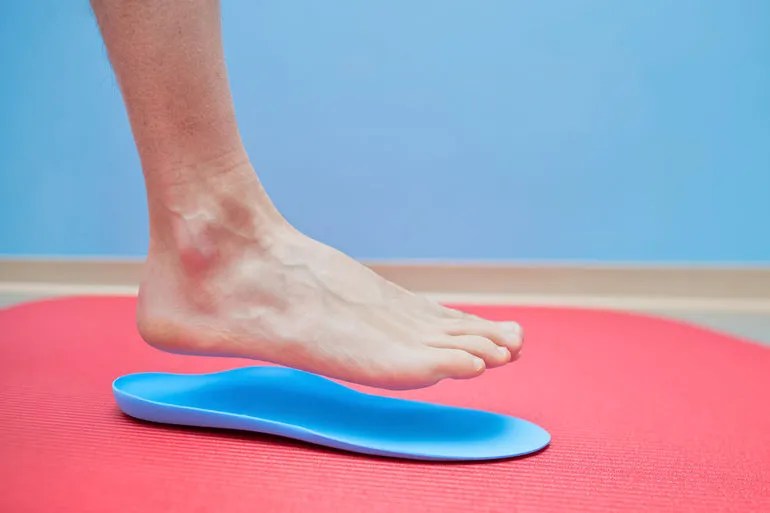
There is a meaningful difference between custom orthotics in St. Catharines prescribed by a physiotherapist and the thing you get after standing on a pressure mat in a shopping centre for eight seconds.
A real custom orthotic starts with a physiotherapist watching you walk, assessing your foot, ankle, knee and hip mechanics, and identifying what is actually going wrong. Then a three-dimensional cast or scan of your foot in a corrected position. Then a device manufactured to a prescription written for your specific problem.
The mat version measures pressure while you stand still. Feet do not hurt while standing still. They hurt during the loading phase of gait, which a static scan cannot see.
At Care First Physiotherapy in St. Catharines, orthotics are prescribed by the same registered physiotherapist who assessed you. That matters, because roughly a third of the patients who come in asking for orthotics turn out not to need them. Sometimes the answer is a calf loading programme and a better pair of shoes.
Who Needs Custom Orthotics in St. Catharines?
Custom foot orthotics help when foot mechanics are contributing to your pain, either in the foot itself or somewhere further up the chain.
- Foot and heel conditions: plantar fasciitis, heel spurs, metatarsalgia, Morton's neuroma, bunions, flat feet (pes planus), high arches (pes cavus), posterior tibial tendon dysfunction. See foot & ankle pain.
- Problems higher up: shin splints, Achilles tendinopathy, patellofemoral knee pain, IT band syndrome, and some hip and lower back pain driven by asymmetric loading or a leg length difference.
- Occupational and lifestyle: if you spend eight to twelve hours a day on concrete (nurses at Niagara Health, GM plant floor, retail, hospitality, trades), orthotics are frequently the difference between manageable and miserable.
- Medical: diabetes-related foot issues requiring offloading, rheumatoid arthritis, and post-surgical foot reconstruction.
Custom Orthotics vs Off-the-Shelf Insoles
| Custom orthotics | Off-the-shelf insoles | |
|---|---|---|
| Made from | A 3D cast or scan of your foot in a corrected position | A generic mould in small, medium, large |
| Prescribed by | A registered physiotherapist, chiropodist or podiatrist after assessment | Nobody |
| Corrects specific mechanics | Yes, posting and control built to your prescription | No, general arch support only |
| Cost | $400 to $600 typically | $30 to $80 |
| Insurance coverage | Usually covered under extended health benefits | Not covered |
| Lifespan | 2 to 5 years, refurbishable | 6 to 12 months |
| Worth it when | You have a diagnosed mechanical problem or persistent pain | You want general cushioning and comfort |
To be fair to the drugstore option: if you have mild, occasional foot fatigue and no diagnosed problem, a good $60 insole may be all you need. We will tell you if that is the case. Custom orthotics are a medical device for a mechanical problem, not an upgrade everyone should buy.
How the Orthotics Process Works at Our St. Catharines Clinic
Step 1: Biomechanical assessment. We examine your foot structure, joint mobility, muscle strength and alignment. We watch you walk, and where relevant, run. We look at your current footwear and its wear pattern, which tells us a great deal.
Step 2: Casting. We take a three-dimensional impression of your foot with it held in the corrected position. Foam box casting or plaster, depending on your foot type.
Step 3: Prescription. Your physiotherapist writes the specification: shell material and rigidity, arch height, posting, cushioning, heel lift, top cover. A rigid carbon shell for a runner is the wrong device for a nurse on twelve-hour shifts.
Step 4: Manufacture. The lab builds your orthotics. Turnaround is typically two to three weeks.
Step 5: Fitting and break-in. You collect them, we check the fit in your actual shoes, and we give you a break-in schedule. Start at two hours a day and build up over two weeks. Wearing brand new orthotics for a full shift on day one is the fastest way to end up hating them.
Step 6: Follow-up. We see you again a few weeks later to adjust. Most orthotics need some tweaking once you have walked in them properly, and those adjustments are part of what you paid for rather than a separate charge.
Cost and Insurance Coverage in Ontario
Our orthotics are priced per pair, and the price includes the gait assessment, the casting, the fitting appointment and any follow-up adjustments. Nothing in that list is billed separately afterwards. Call for the current figure.
Insurance in Ontario: most extended health plans cover custom orthotics, commonly one pair per year or one pair every two years, with a maximum somewhere between $200 and $500. Plans vary widely. Insurers typically require:
- A prescription or referral from a physician, nurse practitioner, chiropodist or podiatrist (requirements vary by insurer, and this is the item that trips people up most often)
- A detailed biomechanical assessment report
- Confirmation of the casting method used
- A lab invoice showing the device was custom manufactured
We prepare all of this documentation for you and direct bill where your plan permits. Bring your insurance details to your assessment and we will tell you exactly what your plan needs before you commit to anything.
Custom Insoles, Prescription Orthotics, Same Thing
Custom insoles in St. Catharines, prescription orthotics in St. Catharines and foot orthotics in Niagara all describe the same device when it is genuinely custom: cast or scanned from your foot, manufactured to a written prescription, and dispensed by a regulated practitioner. What separates them from a shop insert is the assessment behind them, not the material.
FAQs
Book a gait assessment for custom orthotics in St. Catharines
We assess your mechanics first and tell you honestly whether custom orthotics are the right answer — around a third of patients who ask for them turn out not to need them.
Book Your Appointment